
📝 2712 words | ⏱️ 14 min read | 🗓️ June 1, 2026 | 👤 MaxSao
The History of Video Game Consoles: From Magnavox Odyssey to PlayStation 6
💥How Consoles Shaped the Gaming World
For more than fifty years, video game consoles have defined how millions of people experience interactive entertainment. From simple analog circuits to AI‑powered machines capable of rendering lifelike worlds, consoles have evolved alongside technology, culture, and the expectations of players.
This is the complete journey – a timeline of innovation, competition, and creativity that transformed gaming from a niche hobby into a global cultural force.

Subscribe for Gaming Updates & New Releases !!
Stay up to date with the latest game reviews, fresh releases, and curated recommendations delivered straight to your inbox.
No spam, just clean, structured gaming content.. Unsubscribe at any time.

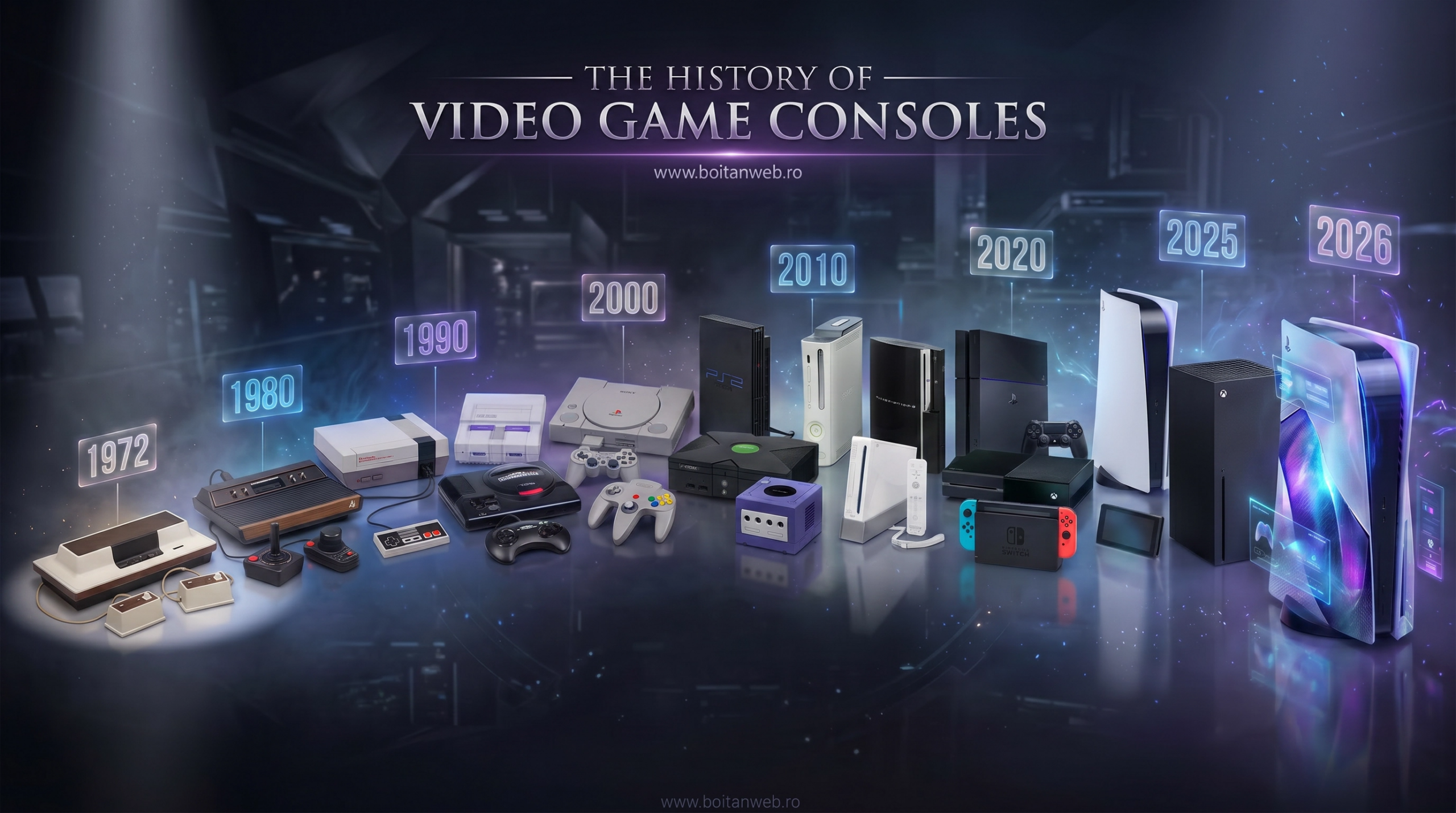
[ 1. The First Generation (1972-1980): The Birth of Home Gaming ]
Magnavox Odyssey (1972) – The Beginning
The Magnavox Odyssey was the world’s first home video game console.
It had no sound, no microprocessor, and relied on analog circuitry. Players used plastic overlays placed on the TV screen to simulate graphics. Despite its primitive nature, the Odyssey introduced the concept of interactive entertainment inside the living room.
Pong Consoles and the Rise of Atari
After the Odyssey, dozens of dedicated Pong machines flooded the market.
Atari quickly became the dominant force, laying the foundation for the first gaming boom.
[ 2. The Second Generation (1980-1983): Growth and Collapse ]
Atari 2600 – The Icon
The Atari 2600 popularized interchangeable cartridges and became a cultural phenomenon.
Games like Space Invaders and Pitfall! turned gaming into a mainstream activity.
ColecoVision & Intellivision
These consoles pushed graphics and gameplay further, offering more complex experiences.
The Video Game Crash of 1983
Oversaturation, poor-quality games, and lack of regulation led to a catastrophic market collapse.
Retailers abandoned video games, and many believed the industry was dead.
[ 3. The Third Generation (1983-1989): Nintendo Saves the Industry ]
Nintendo Entertainment System (NES)
Nintendo revived gaming with strict quality control, iconic franchises, and a revolutionary controller featuring the D-Pad.
Super Mario Bros., The Legend of Zelda, and Metroid defined modern game design.
Sega Master System
Although overshadowed by the NES, it introduced advanced graphics and helped Sega build a loyal fanbase.
[ 4. The Fourth Generation (1989-1996): The 16-Bit Golden Age ]
Super Nintendo Entertainment System (SNES)
The SNES delivered Mode 7 effects, legendary RPGs, and some of the most beloved games ever created.
Sega Genesis / Mega Drive
With Sonic the Hedgehog and aggressive marketing, Sega positioned itself as the “cool” alternative to Nintendo.
The console wars officially began.
[ 5. The Fifth Generation (1994-2000): The 3D Revolution ]
Sony PlayStation
Sony entered the market with a CD‑based console that was cheaper to develop for and offered massive storage.
The result: Final Fantasy VII, Metal Gear Solid, Gran Turismo, and a new era of cinematic gaming.
Nintendo 64
Nintendo embraced 3D worlds with analog control and iconic titles like Super Mario 64 and Ocarina of Time.
Sega Saturn
Despite strong hardware, poor marketing and complex architecture hurt its success.
[ 6. The Sixth Generation (2000-2006): The Modern Era Begins ]
PlayStation 2
The best-selling console of all time.
Its DVD player, massive library, and global reach made it unstoppable.
Xbox
Microsoft entered gaming with a powerful machine and introduced Xbox Live, setting the standard for online multiplayer.
Nintendo GameCube
A compact, powerful console with beloved exclusives, though commercially overshadowed.
[ 7. The Seventh Generation (2005-2013): Online Gaming & Motion Controls ]
Xbox 360
Xbox Live matured into the industry’s leading online service.
Halo 3, Gears of War, and Forza defined the platform.
PlayStation 3
A rocky launch due to high price and complex architecture, but later redeemed by masterpieces like The Last of Us.
Nintendo Wii
Motion controls revolutionized casual gaming.
The Wii became a cultural phenomenon far beyond traditional gamers.
[ 8. The Eighth Generation (2013-2020): 4K, Streaming & Digital Stores ]
PlayStation 4
Sony dominated with strong exclusives and a developer-friendly architecture.
Xbox One
A controversial launch hurt early adoption, but the console recovered through services like Game Pass.
Nintendo Switch
A hybrid handheld-console system that redefined Nintendo’s identity and became a global hit.
[ 9. The Ninth Generation (2020-2026): SSD, Ray Tracing & AI ]
PlayStation 5
Ultra-fast SSD, ray tracing, and the DualSense controller introduced a new level of immersion.
Xbox Series X|S
The most powerful hardware of its generation, backed by Game Pass and cloud integration.
[ 10. The Tenth Generation (2026–2032): PlayStation 6 & Beyond ]
PlayStation 6
The PS6 represents the next leap in console evolution:
- AI-driven rendering
- Cloud-assisted processing
- Worlds that adapt dynamically to player behavior
- Near-instant loading and photorealistic environments
It marks the beginning of a new era where consoles blend local power with cloud intelligence.
Xbox Next (Projected)
While details remain speculative, Microsoft is expected to push:
- deeper cloud integration
- unified PC-console ecosystems
- AI-enhanced game development tools
The future of consoles is no longer just hardware – it’s intelligent, adaptive ecosystems.
[ Conclusion: 50 Years of Innovation ]
From the analog circuits of the Magnavox Odyssey to the AI‑powered architecture of the PlayStation 6, video game consoles have evolved at a breathtaking pace.
Each generation introduced new ideas, new technologies, and new ways to play.
And as the industry moves toward cloud computing, procedural worlds, and intelligent systems, one thing remains certain: consoles will continue to shape the future of gaming for decades to come.
→ Related Articles
👉 What Is a Video Game?
👉 How Games Are Made
👉 The Evolution of Gamer Culture





→ Quick answers to common gaming questions.













MKIceAndFire – The Silent Giant of Gaming Walkthroughs