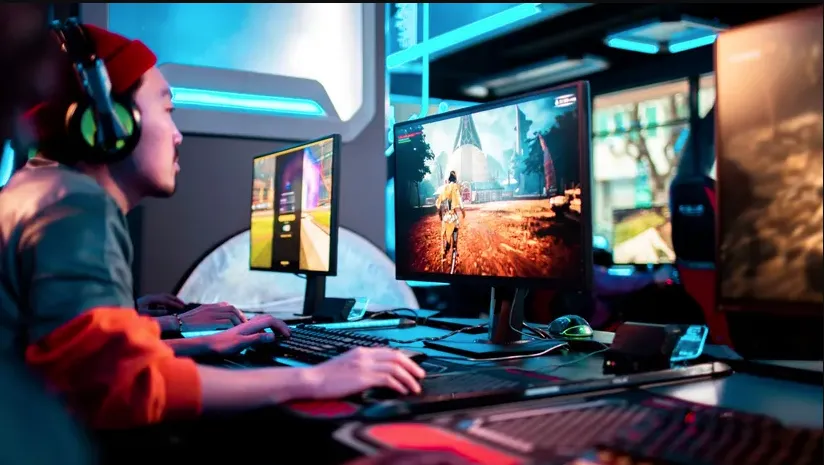
Discover how video games are created, from simple 2D projects to large‑scale AAA productions. This page explores the full game development process, essential design principles, and the complete history of gaming – offering clear explanations, practical insights, and educational guides for beginners and enthusiasts alike.

How a Simple Game Is Made
A Beginner-Friendly Look at Game Development
Creating a simple game is far less intimidating than most people imagine. At its core, every game – no matter how small — follows the same basic structure: input, logic, and output. What changes is the complexity.
🧩 1. Concept & Idea
Every game starts with a small idea:
- A character jumps over obstacles
- A ball bounces and breaks bricks
- A spaceship shoots asteroids
The key is to keep the idea focused and achievable.
🛠️ 2. Choosing the Right Tools
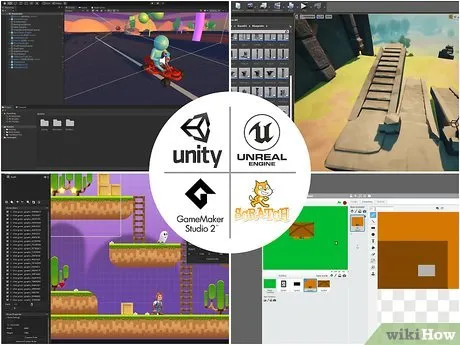
Beginner-friendly engines include:
- Unity (2D & 3D)
- Godot (free, open-source)
- GameMaker Studio (perfect for 2D)
- Construct (browser-based, no coding)
These tools provide templates, physics, and visual editors that simplify development.
🎨 3. Creating Basic Assets
Simple games often use:
- 2D sprites
- Basic shapes
- Free sound effects
- Simple animations
You don’t need advanced art – clarity matters more than detail.
🧠 4. Building the Game Loop
Every game runs a loop:
- Read player input
- Update the world
- Draw everything on screen
This loop repeats dozens of times per second.
🧪 5. Testing & Polishing
Even simple games need:
- Bug fixes
- Difficulty balancing
- UI adjustments
- Sound tuning
🚀 6. Publishing
Platforms like itch.io, Steam, and mobile stores make it easy to share your game with the world.
Simple games teach the fundamentals – and fundamentals are everything.

How a Complex Game Is Made
Inside the AAA Game Development Pipeline
Complex games – open worlds, RPGs, shooters – require massive teams, advanced technology, and years of production. The process is structured, expensive, and highly collaborative.
🧭 1. Pre-Production
This phase defines the entire project.
Teams create:
- Story & world lore
- Concept art
- Gameplay prototypes
- Technical plans
- Budget & timeline
If pre-production fails, the whole game collapses later.
🏭 2. Production
This is where the real work happens.
Hundreds of developers contribute to:
- Level design
- Character modeling
- Animation & motion capture
- Combat systems
- AI behavior
- Physics
- Sound design
- Voice acting
- Cinematics
AAA studios use engines like Unreal Engine, Decima, RE Engine, Snowdrop, or custom in‑house engines.
🧪 3. Quality Assurance (QA)
Testers play the game thousands of hours to find:
- Bugs
- Crashes
- Balance issues
- Exploits
- Performance problems
QA is one of the most important – and underrated – parts of development.
🚀 4. Launch & Post‑Launch
After release, teams continue working on:
- Patches
- DLC
- Expansions
- Performance updates
- Community feedback
AAA games are living products that evolve for years.
Complex games are built like movies, software, and engineering projects combined.

A Brief History of Gaming
From Pixels to Photorealism
Video games have evolved from simple experiments to one of the world’s largest entertainment industries.
📼 1. The Birth of Gaming (1960s-1970s)
Early games like Spacewar! and Pong introduced interactive entertainment.
Arcades exploded in popularity, creating the first gaming culture.
🕹️ 2. The Golden Age (1980s)
Iconic titles defined the decade
- Pac-Man
- Donkey Kong
- Super Mario Bros
- Tetris
Home consoles like the NES revolutionized gaming.
💾 3. The 3D Revolution (1990s)
Games transitioned from 2D to 3D:
- Doom
- Quake
- Tomb Raider
- Final Fantasy VII
- PlayStation vs Nintendo 64
This era shaped modern game design.
💿 4. The Rise of Online Gaming (2000s)
Broadband internet changed everything:
- MMORPGs (World of Warcraft)
- Online shooters (Halo, Counter-Strike)
- Digital stores (Steam)
Gaming became social and global.
🎮 5. The Modern Era (2010s-Present)
Today’s games feature:
- Open worlds
- Photorealistic graphics
- Advanced AI
- VR & AR
- Cloud gaming
- Massive esports scenes
Gaming is now bigger than film and music combined.
The history of gaming is a story of creativity, technology, and human imagination.

⭐ Conclusion
Together, these three articles offer a complete, accessible overview of how video games are created and how the gaming industry evolved into what it is today. By exploring the fundamentals of simple game development, the complex production pipelines behind AAA titles, and the rich history that shaped modern gaming, readers gain a clear understanding of both the creative and technical forces that drive this medium forward. Whether someone is a beginner curious about making their first game, an enthusiast fascinated by how large studios operate, or a fan interested in the origins of gaming, this collection provides a solid foundation of knowledge. It highlights the passion, innovation, and continuous evolution that define the world of video games – from their humble beginnings to the advanced, immersive experiences we enjoy today.
Tags: AAA game production, complex game development, evolution of gaming, game creation process, game design fundamentals, game development basics, game development guide, game development pipeline, gaming evolution timeline, history of video games, how games are made, how to make a game, simple game creation, video game history, video game industry history