📝 2100 words | ⏱️ 11 min read | 🗓️ May 23, 2026 | 👤 MaxSao
Syberia II – The Continuation of a Dream – A Journey Into the Heart of Myth, Snow, and Human Fragility
💥Kate Walker’s odyssey continues in a breathtaking sequel that deepens the emotional, artistic, and philosophical legacy of Benoît Sokal’s universe.
Released in 2004, Syberia II is the direct continuation of Kate Walker’s extraordinary journey begun in the original Syberia. Developed by Microids and guided once again by the artistic vision of Benoît Sokal, the game expands the world, themes, and emotional stakes of the series.
Where the first game was about awakening from a life of routine, Syberia II is about commitment – the moment when Kate chooses not to return to New York, but to follow Hans Voralberg into the unknown. The sequel is colder, more introspective, more mythic. It is a story about loyalty, sacrifice, and the fragile line between dreams and reality.

Subscribe for Gaming Updates & New Releases !!
Stay up to date with the latest game reviews, fresh releases, and curated recommendations delivered straight to your inbox.
No spam, just clean, structured gaming content.. Unsubscribe at any time.

[ Story Overview ]
Syberia II begins exactly where the first game ends: Kate Walker boards the mechanical train alongside Hans Voralberg and Oscar, determined to help Hans reach the legendary island of Syberia – the last refuge of the mammoths.
The journey takes them through:
1. Romansburg
A frozen frontier town where Kate encounters monks, children, and the harshness of the northern wilderness.
2. The Monastery
A place of ritual, superstition, and secrets, where Hans’ fragile health becomes a central concern.
3. The Youkol Village
Home of the nomadic Youkol people, guardians of ancient traditions and the mammoths’ final migration.
4. The Ice Fields and Syberia Itself
A dreamlike, almost spiritual landscape where myth and reality merge.
Throughout the story, Kate faces:
- the consequences of abandoning her old life
- the moral weight of her choices
- the growing bond with Hans
- Oscar’s evolving identity
- the looming threat of Hans’ deteriorating condition
The narrative is more emotional, more symbolic, and more focused on the theme of following a dream to the very end.

[ Gameplay & Features ]
1. Direct Continuation of the First Game
The gameplay remains faithful to the classic point-and-click formula, with:
- exploration
- puzzle solving
- dialogue
- environmental interaction
2. More Organic, Environmental Puzzles
Puzzles are more integrated into the world’s logic:
- ice mechanisms
- ancient rituals
- Youkol technology
- mechanical creatures
- natural obstacles
3. Stronger Emotional Focus
The relationship between Kate, Hans, and Oscar becomes central.
The game explores themes of:
- loyalty
- mortality
- destiny
- the price of dreams
4. A Colder, Wilder World
The environments are harsher, more dangerous, and more atmospheric than in the first game.

[ Graphics and Visual Style ]
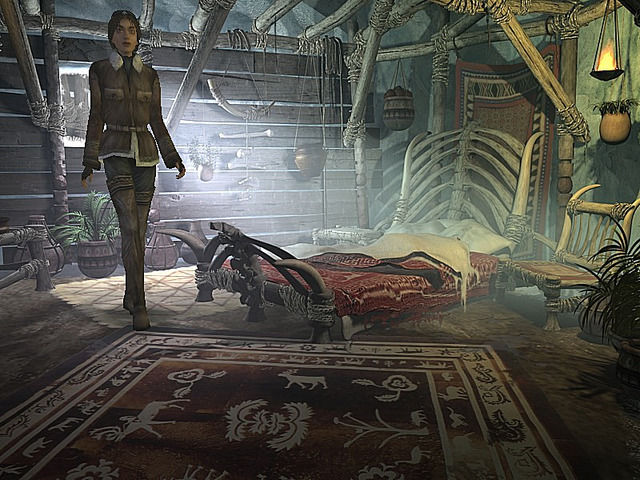
Syberia II elevates Sokal’s artistic vision with:
- snow-covered landscapes
- frozen lakes
- abandoned monasteries
- intricate mechanical structures
- Youkol architecture
- mythic, dreamlike vistas
The game’s visual identity is colder, more melancholic, and more spiritual than its predecessor.
Every location feels like a painting carved from ice and memory.

[ Conclusion ]
Syberia II is a rare sequel that not only continues a story – it deepens it.
It is colder, more emotional, more mythic, and more introspective than the first game.
It pushes Kate Walker to her limits, explores Hans Voralberg’s fragile humanity, and brings the dream of Syberia closer than ever.
This is a game about following a dream even when the world says it’s impossible.
A game about loyalty, sacrifice, and the beauty of believing in something greater than yourself.
Even today, Syberia II stands as one of the most poetic and emotionally resonant adventure games ever created.
→ Continue the saga with the next chapter: Syberia 3 (2017)
★ Syberia II Wallpapers ★




[ 🖥️ PC System Requirements ]
| Minimum |
|---|
| OS: Windows XP/Vista/7/10 |
| CPU: 1.5 GHz |
| Memory: 512 MB |
| Graphics: DirectX compatible graphics card with 128 MB memory |
| Storage: 1.5 GB |
[ Platforms ✦ Genre Classification ]
| Platforms | Genre Classification |
|---|---|
| Syberia II has been released on: | Point-and-Click Adventure |
| PC (Windows, macOS) | Narrative Adventure |
| PlayStation 2 / PlayStation 3 / PlayStation 4 | Puzzle Adventure |
| Xbox / Xbox 360 | Art‑Driven Story Game |
| Nintendo DS / Nintendo Switch | |
| iOS / Android | |
| Its longevity mirrors the timelessness of its story. |
[ Developer ✦ Publisher ✦ Release Date ]
| Developer | Publisher | Release Date |
|---|---|---|
| Microids | Microids | March 29, 2004 |




→ Quick answers to common gaming questions.